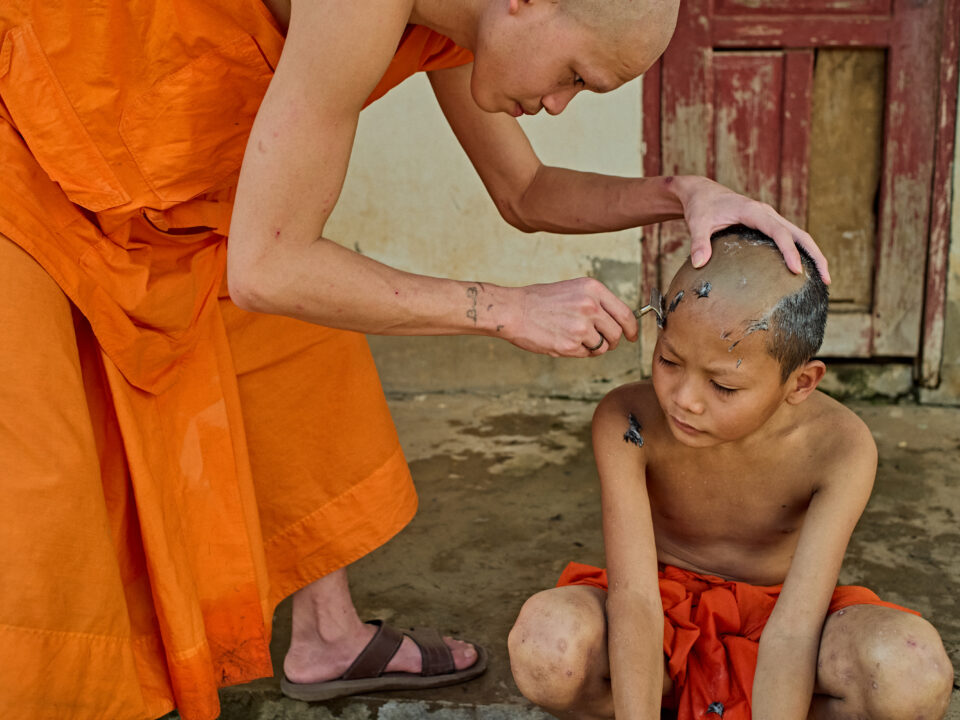


Young people enjoying a local fair in Mae Sot, Thailand @ Miriam Hauertmann
Myanmar/Thailand: Members of the exiled activist community in Thailand reflect on how the Spring Revolution has changed the meaning of masculinity.
“In my community, men are expected to be leaders. It seems like they have more opportunities and privileges, but at the same time, they’re also taught to be ready to sacrifice themselves for their family.” explains Nyein, a former teacher from the Sagaing Region when asked about traditional gender norms. Strong leader, powerholder, head of the household and the breadwinner: these are the most common markers of traditional masculinity in Myanmar.
Many of these are rooted in the concept of bhone, that ascribes higher power and status to men just by virtue of being born male: “When it comes to decision-making and leadership roles, those were always seen as positions meant only for men. This kind of mindset has been passed down and reinforced through generations. We were taught that men are somehow closer to God – that leadership and power belong to them. Women and others were never seen as having that same connection or authority.” explains Nicolas Thant, a non-binary art activist.
Challenges to traditional beliefs
Being in exile at the Thai border, some of these roles have changed due to the precarious situation people often find themselves in. Nan Hseng (name changed for security) who works for a local NGO in Mae Sot explains how she is now the main income earner: “As a woman from Myanmar, I still felt hesitant to call myself the breadwinner. It’s deeply rooted in our beliefs. It can be very difficult for men to accept that they’re not the ones providing for the family. It makes the men feel small. Even though my husband never said it outright, his actions and the way he spoke showed that he wasn’t comfortable. So I tried not to let others know.”
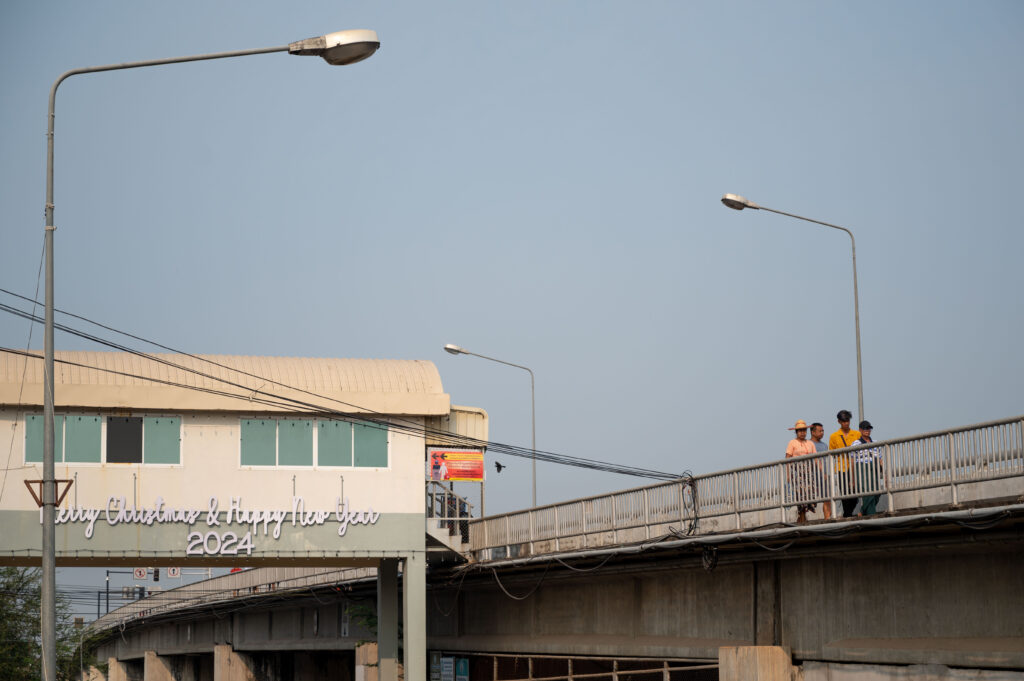
People crossing Friendship Bridge between Thailand and Myanmar @ Miriam Hauertmann
Women seem to be able to find jobs easier than men, doing service jobs, cleaning, teaching or factory work in Mae Sot. Some men step in and take over the household chores and care work which traditionally – and for many before going into exile exclusively – was done by their wives, girlfriends or daughters.
The impacts on men
For some men, the loss of income and status is challenging, as it goes against deeply held beliefs about masculinity and their sense of self-worth. Pandora, an activist and former PDF (People’s Defence Force, armed opposition to the military) fighter shared that she has witnessed the psychological and harmful effects this can have: “Sometimes, men become depressed when they are unemployed. In Myanmar, when they had a good job, life was more stable. But in Mae Sot, their lives have changed. They struggle to control their emotions when jobless, because society expects them to support their family financially, and take on leadership roles.”
In contrast, some men have embraced emotional openness and expression and are sharing their fears and worries more openly than before the revolution. They are more comfortable with crying in front of others, something that Pandora attributes to the changes of gender roles and expectations coming from the revolution.
Progressive online spaces vs realities on the ground
Views on whether the revolution has changed ideas about gender roles and masculinity seem divided. For some, there is a clear progress towards more gender equality. Feminist ideas are being shared and debated especially in online spaces, which is clearly regarded by many as a positive development. Pandora is one of them: “During this revolution, I had the opportunity to learn more about gender justice. I got to interact with different communities, including LGBTIQ+ and non-binary individuals, and I could speak with them directly. I learned to understand and accept much more than I did before the coup.”
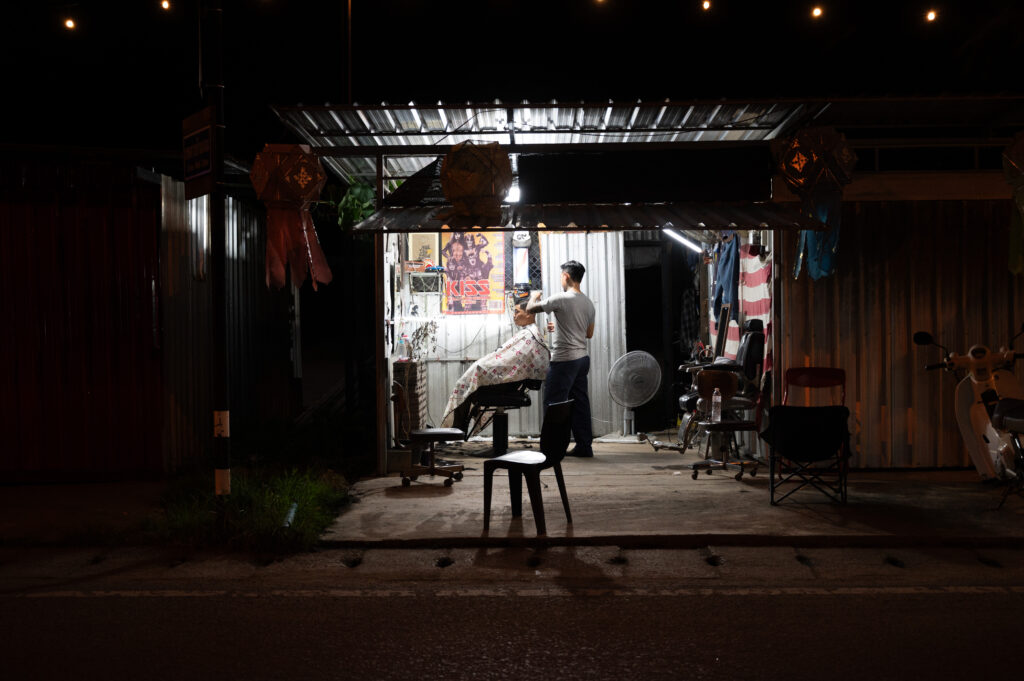
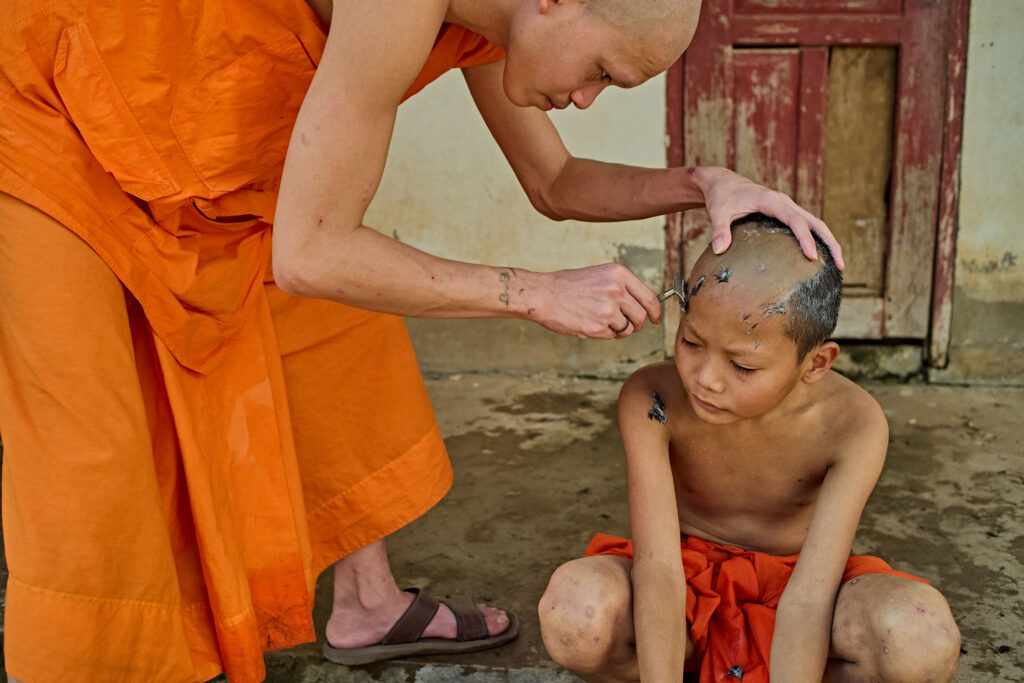
A barber cuts a man’s hair in the border town of Mae Sariang, Thailand @ Miriam Hauertmann
Many non-governmental organizations and feminist groups rely on online discussions and seminars for education and advocacy. The question is, however, how impactful are these approaches when many people can’t access the internet easily. As Han Htet explains: “In Sagaing and other conflict-affected areas, people can’t stay online for long. They don’t have access to updated news and are focused on day-to-day survival. Even if they do get online, I’m not sure the discussions on Facebook ever reach them.” He sees the progressiveness of online debates lacking the connection to developments on the ground: “Most of the young people I work with on the frontlines, fighting the junta, are on the other side, I’d say. It’s not that they’re unwilling to change their perspectives – they just feel that those kinds of discussions don’t actually help weaken the junta in real life.”
How many debates and actual change people are able and willing to contribute to, might also be limited by the challenging life situation they are experiencing. Ko Htet, activist and founder of the local organisation Mae Sot Eain, reflects that online discussions often don’t lead to more understanding of gender issues but can fuel division and conflict: “Today, because of political pressure and daily struggles, people are exhausted and find it difficult to engage deeply with important issues or topics. When a new issue arises, few take the time to listen to different perspectives from both sides. Instead, people tend to respond quickly and emotionally, often with anger. As a result, discussions rarely lead to real solutions. Most debates end halfway through online, only to spark another round of online conflict. The cycle continues without resolution.”
Militarized masculinities on the rise
In online and offline spaces, war and armed conflict have increased the equation of masculinity with the military. Nan Hseng explained: “Being a man in Myanmar has completely changed since the coup. The role has shifted – from being the breadwinner to becoming a soldier or a hero in the fight for the revolution. “
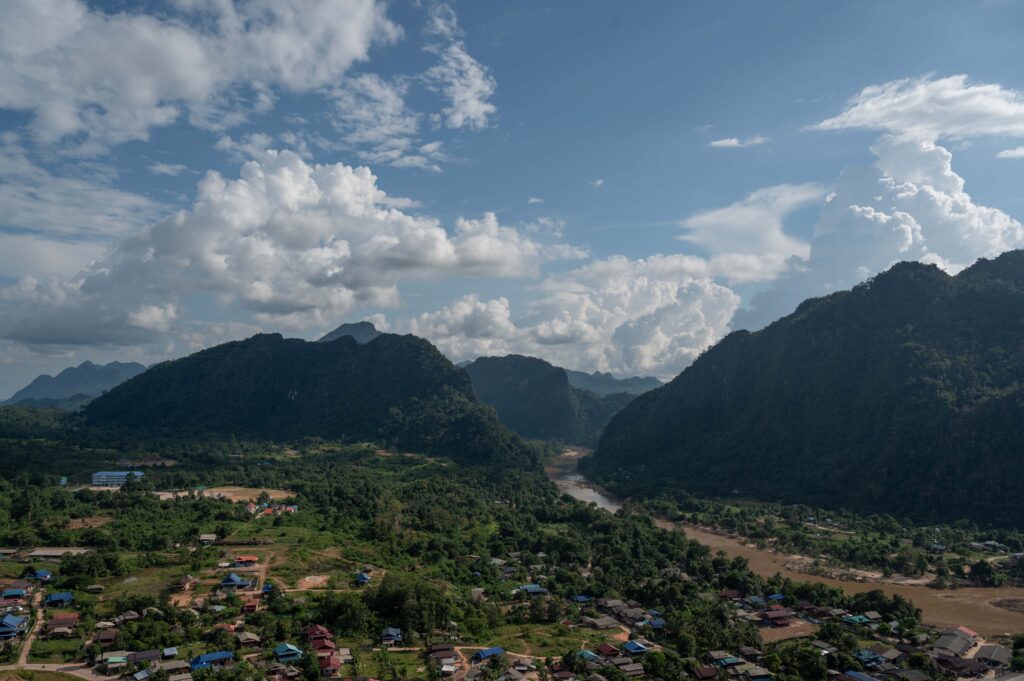
Looking across the Moei River where Thailand meets Myanmar @ Miriam Hauertmann
This is nothing new in Myanmar`s militarized past. Many important historical figures have been men, which was why the military often portrayed them as heroes. Militarized masculinities furthermore sustain oppressive structures and behaviour. “In areas affected by the conflict, you can really see how deeply these ideas are rooted. Many people carry guns, and having a gun gives them power” Pandora illustrates.
Han Htet acknowledges that attributes like bravery, assertiveness, and protectiveness are necessary to fight the junta, but he also sees the negative effects of militarized masculinity on civilians and local PDFs: “Especially in Sagaing the PDFs are engaging in activities similar to what the military does, including killing civilians. These actions are harmful. So, while such traits may be useful for fighting the enemy, they are not good in other contexts, especially for people who are not involved in the war.”
Gender equality as a pillar of democracy?
In the Gender Equality Position Paper of the National Unity Consultative Council (NUCC), the political consultative body of the National Unity Government, gender equality is said to be an integral part of human rights and one of the basic elements of democracy. This seems to reflect how for many people one aspect of the current revolution is the fight against gender oppression. Nicholas Thant explains: “The revolution is not only against the dictatorship. It’s also a revolution of ideology. We are fighting to challenge deeply rooted systems of (toxic) masculinity, patriarchy, and outdated ways of thinking. These structures have dominated society for so long, and this revolution seeks to include everyone in changing them.”
Ko Htet explained that “the challenge is that while people try to accept and promote gender equality, […] many only pretend to understand it due to social pressure. In reality, their actions often go against the principles of gender equality.” These views surface frequently during critical online debates in which feminist ideas are being discredited.
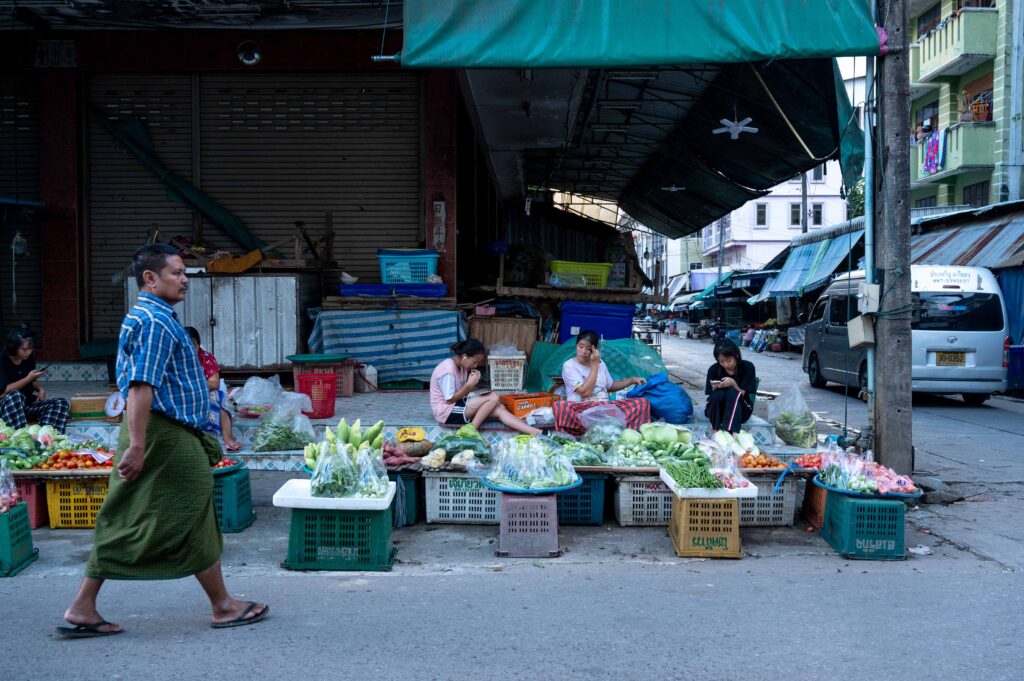
Everyday life at the local market in Mae Sot, Thailand @ Miriam Hauertmann
Some question whether this is a unified understanding about gender equality: “It’s contradictory now – it seems like even people from the revolutionary groups are defending the old power structures that once favored them.”, said Nyein. Han Htet confirms this view: “There are also some men in the pro-democracy movement who seem almost allergic to gender equality.”
Outlook – Myanmar masculinities
Myanmar masculinities are clearly in transition. New ideas take hold, while old ones are being filled with more meaning. On the positive side, gender equality remains a topic of discussion, opposing views however are also on the rise. Moreover, the hardship people are experiencing through life in conflict zones and exile, don’t leave much space for engagement with these topics. Nan Hseng is nevertheless optimistic: “I don’t think this change will stop. Even in just a few years, there have already been many positive changes in Myanmar. And if we ever get the chance to go back – even if it takes a long time – I believe we’ll see more progress.”

Elaine Haller is a peace practitioner and gender advocate. She has been working on these topics in the context of Myanmar through the Civil Peace Service for the last three years and was based in Mae Sot, Thailand. She holds a Master in Intercultural Conflict Management and a Bachelor in Southeast Asian Studies.
-
The User does not have any posts
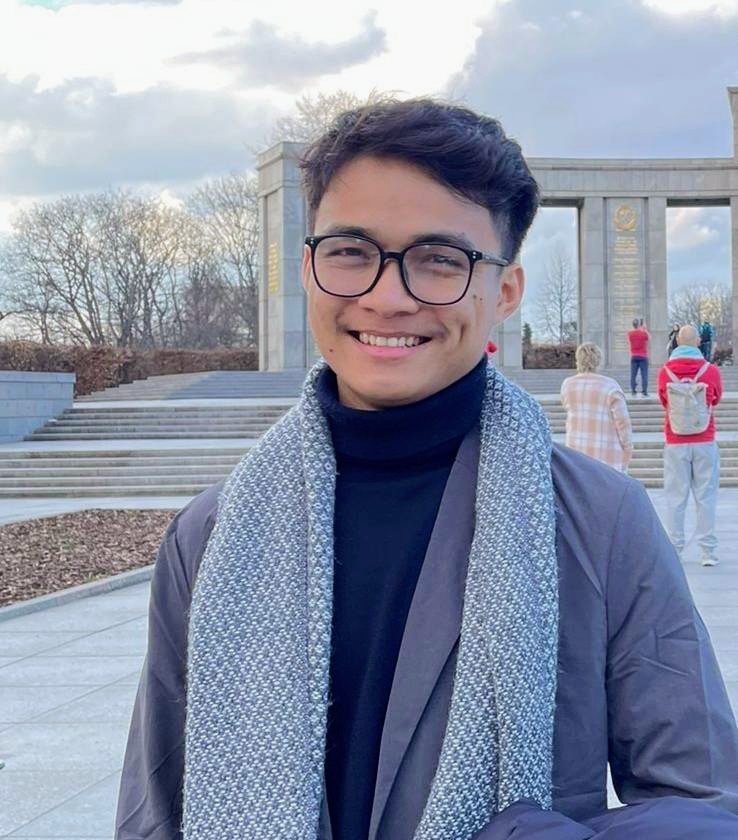
Lwin Ko Ko Oo is a peace education trainer working with youth and educators in Myanmar and on the Thai border. His work emphasizes applying peace education practices to promote constructive communication and peaceful learning environments in schools.
-
The User does not have any posts