

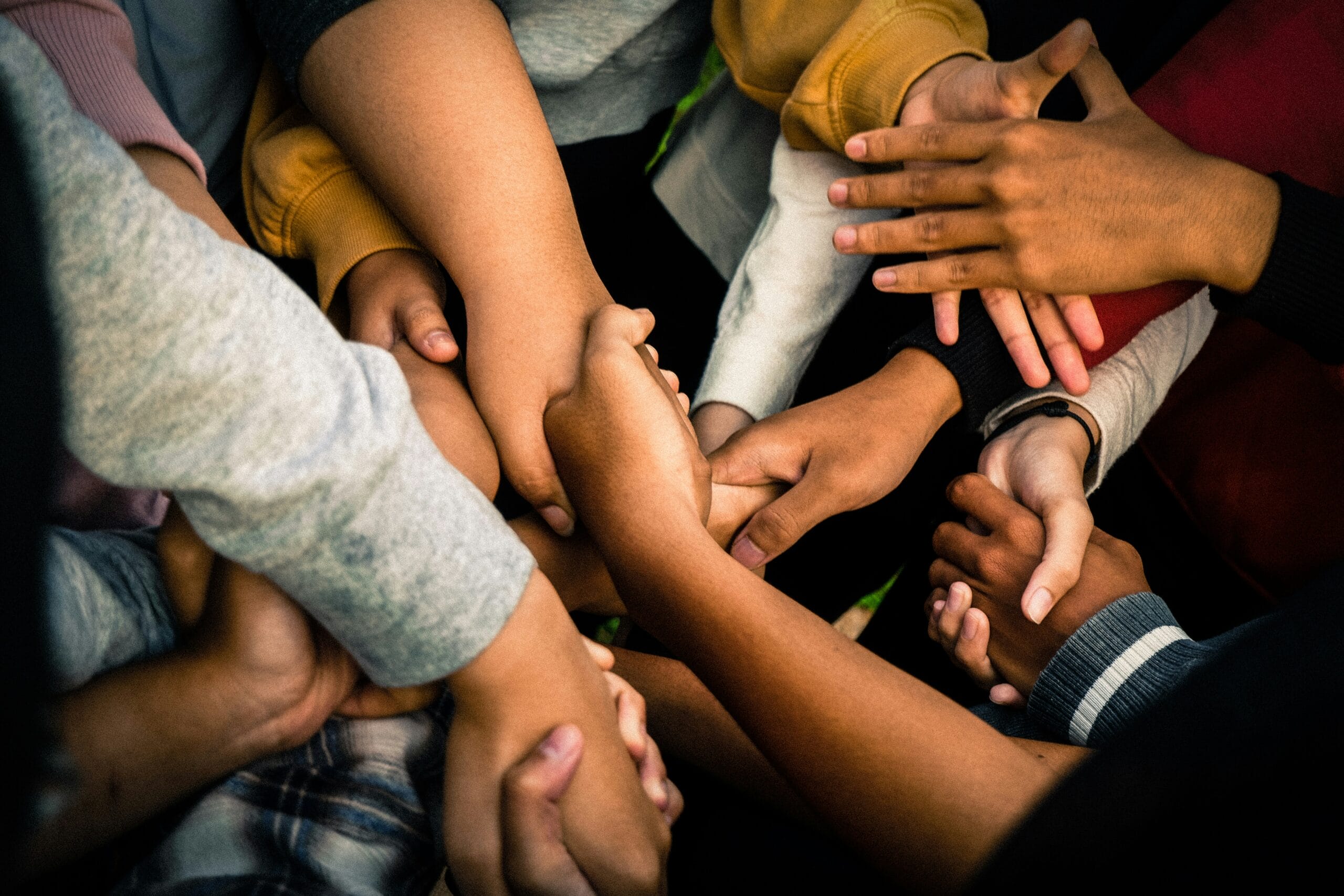
© Marlis Trio Akbar / Unsplash (Unsplash License)
Peace initiatives in Southeast Asia
“We need to have dialogue with people who possess goodness, sincerity and selflessness […] It has to be people, who are not oriented towards power, success and money and are therefore capable of an attitude towards inner peace.” Psychologist Arno Gruen wrote this in his book The Betrayal of the Self (In German: Ich will eine Welt ohne Kriege).
This issue of südostasien focuses on such people and their initiatives striving to create lasting peace. Our understanding of peace encompasses more than the absence of war and direct violence. Following the definition of Johann Galtung, we comprehend peace as the dismantling of structural violence, inequality and exclusion. Peace is not only a state of being, but an ongoing societal process which requires participation, solidarity and the ability to deal with conflicts constructively.
The recent history of Southeast Asia is shaped by several bloody communal, national and international conflicts. The causes of these conflicts vary, ranging from the lingering consequences of colonialism to social and economic inequalities. In spite of these conflicts or rather because of that, the region is also home to a vast number of remarkable peace initiatives. Be it dealing with historical grievances or addressing contemporary social tensions, activists, community organisers, religious leaders and artists contribute to fostering peace on a local level. They work on strengthening social cohesion in communities suffering from the consequences of uncontrollable economic “development”, climate change and the polarisation and misinformation of mass media.
Their engagement is even more important now. It has been long known among peace practitioners that “peace from below” is more sustainable and effective. However, we are currently experiencing a decrease in international solidarity and an erosion of global norms that until now have made peace possible. The understanding that our destinies are deeply intertwined is increasingly being relegated to the sidelines in order to protect the interests of a selected few. The consequences of this process reach all levels of society.
With this in mind, we would like to emphasise the contributions of those who continue fostering peace and working against these developments. They could be individual or community ideas and initiatives. They could use artistic, journalistic, spiritual, permacultural practices or many other approaches. They could target urban or rural areas. What binds them is a commitment to non-violence, compassion and solidarity, as well as a desire to build bridges and overcome divisions through collective action.
Here are some questions that potential articles could explore and address:
- How is peace understood under different cultural, religious and socio-political conditions? What terms and concepts are there to define peace in Southeast Asian communities?
- Does peacework have an end? Which initiatives dedicate their work to deal with past conflicts? How do they contribute to justice, reconciliation and sustainable peace?
- What implications do state-led securitisation discourses of political and social issues in Southeast Asia have for the scope of action available to those working to promote peace?
- Where do the practical and ethical boundaries of peacework lie? How can non-violence be conceived, practised and promoted in contexts where acts of violence are persistent and ubiquitous?
- Who is “allowed” to be a peace advocate? Who are taking on the role of peacebuilders and how can authoritarian regimes, like China, foster peace in other countries? Can international engagement reproduce colonial power structures?
- How can peace be made visible, lived and experienced and who contributes to these processes? Are there any inspiring local initiatives for non-violent forms of co-existence and conflict transformation?
- How do the new global challenges (e.g. climate change and striving for climate justice, pervasive presence of social media) influence local peace initiatives and expectations of peace?
- How inclusive is peace? How do marginalised groups (e.g. women, ethnic/religious minorities, LGBTQ+ community) support peace initiatives and processes?
- How do peace initiatives draw upon local spiritual, artistic and ecological practices?
- How do peace initiatives achieve the conditions for “positive peace”? What role do social equality, political participation, ecological sustainability and the deconstruction of structural inequalities play for long term peace initiatives.
We welcome articles in various formats: portraits of different actors, commentaries, reports, analyses, interviews, photo stories and reviews of films, music, or books. We are looking for articles that deal with individual aspects mentioned above (or individual countries in Southeast Asia) as well as overview articles on structural issues and contexts.
Please send a short proposal (max. 1,000 characters) to frieden@suedostasien.net by July 20th 2026 at the latest. We look forward to your ideas!
Dominik Hofzumahaus, Hong Trinh Geyer, Laura Faludi, Mustafa Kursun, Sophie Meester, Trishinia Daos (The editorial team for the issue “Peace initiatives in Southeast Asia”)
The self-understanding of südostasien:
südostasien brings together voices from and about Southeast Asia on current developments in politics, economics, ecology, society, and culture. Each year, we publish articles about the region and the Southeast Asian countries, as well as their global/international connections, under four main subjects.
As a space for discussions between actors from Southeast Asia and Germany who are involved in and knowledgeable about social movements, südostasien sees itself as a pluralistic forum for dialogues rooted in solidarity and critical of dominant power structures. südostasien explores the opportunities for transnational solidarity work in the face of imbalanced power dynamics between the Global North and South. südostasien aims to generate thought-provoking impulses for action, particularly in Germany and across Europe.
Deadline
The deadline for proposals (no more than 1,000 characters) is 20th July, 2026.
The submission deadline for articles (max. 10,000 characters including spaces) will be decided upon discussion with the authors after the acceptance of proposals.
We look forward to your ideas!
Editorial information:
Copyright & Copyleft
Copyright issues should be clarified in advance, and images should be labeled (with the photographer’s name and the image’s title).
Unless stated otherwise, all content is published under the Creative Commons Attribution-ShareAlike 4.0 International License (CC BY-SA 4.0).
Download:
Call for Papers – 3|2026 (German)
Call for Papers – 3|2026 (English)
Contact the editorial team: