

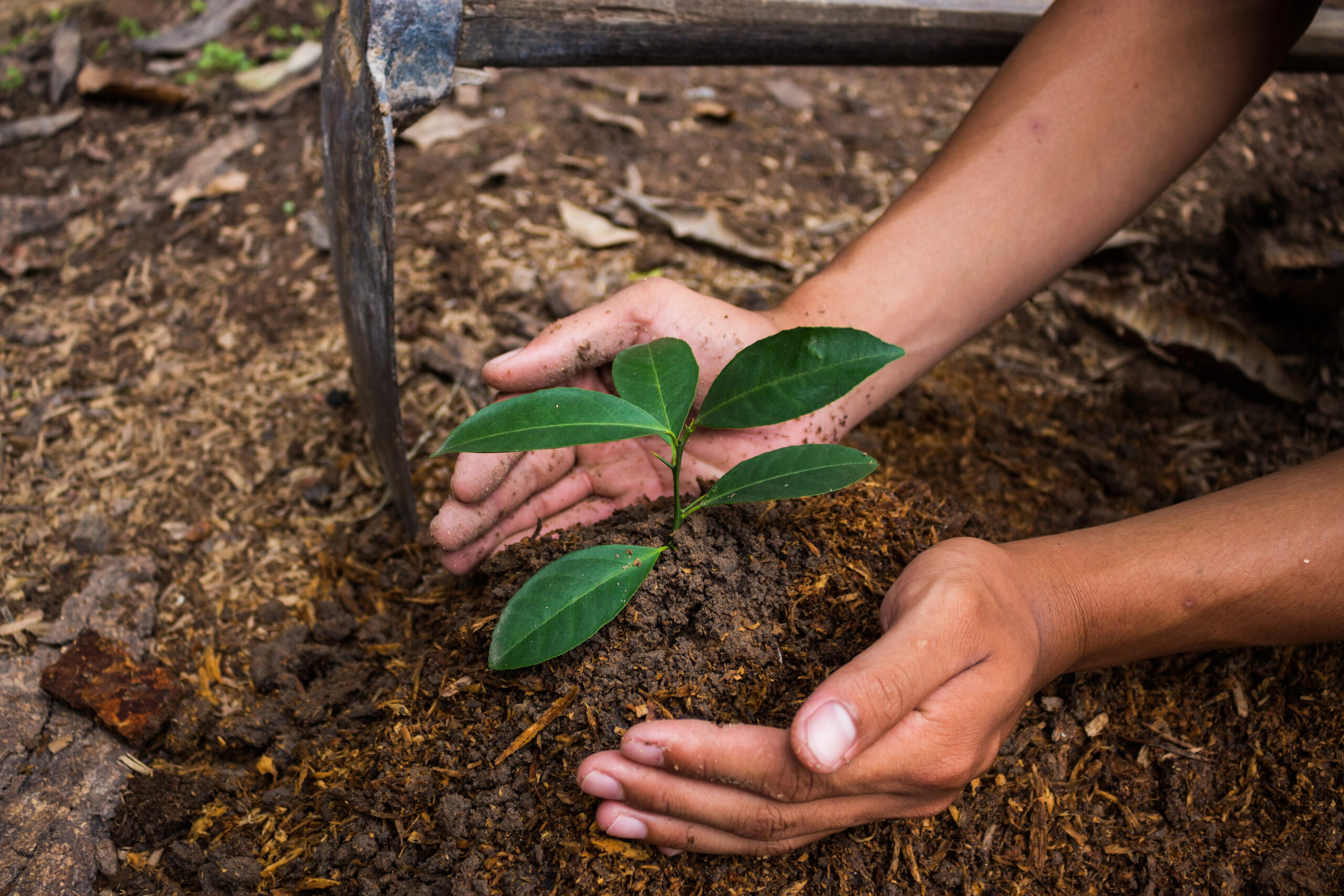
© Rtee Nattapong, alle Rechte vorbehalten
Kinship and Responsibility – Indigenous Knowledge Systems in Southeast Asia
„Indigenous“ means „being home in a specific place.“ Accordingly, “indigenous people” refer to groups of people who have lived in the same natural environment for a long time or did so before being displaced. They often retain a way of life closely adapted to the natural environment. Indigenous Knowledge Systems (IKS) have emerged from human-environment interactions developed by indigenous communities. They are passed down through generations.
During the colonisation of the Global South – and earlier, through the destruction of indigenous ways of life within Europe itself – power structures emerged that are rooted in the separation and exploitation of land and people. IKS have been ignored and marginalised. Under the banner of „modernity“, urbanisation and industrialisation were framed as models of a „desirable world“.
The way we live today is the consequence of these power structures. It is characterized by crises, ecological depletion, and social inequality. These conditions are the result of a life-hostile practice rooted in capital accumulation – one that accepts war, climate change, and the collapse of ecosystems as collateral damages.
As broader sections of society recogonise that unlimited growth is impossible on a finite planet, the question becomes more urgent than ever: How can we make our world liveable again in present and future times? Indigenous voices are increasingly being heard in this debate.
IKS, in contrast to the dominant “modern” worldview – which is grounded in Eurocentric scientific systems and technologies – are based on a fundamental understanding shaped by relatedness and responsibility. Knowledge, in this regard, emerges from experience, observation, and respect for natural cycles – not from control or appropriation.
In times of global climate negotiations and growing debates around “nature-based solutions”, the question of recognition – and also of the co-optation – of indigenous knowledge is gaining renewed significance. Well-known examples of indigenous practices in the areas of land use, biodiversity, and social organisation include the rice cultivation systems of the Ifugao (Philippines), the forest practices of the Dayak (Indonesia), and the Karen people’s spiritual relationship to water (Thailand/Myanmar).
Indigenous knowledge is dynamic. It adapts to changing environmental conditions and social challenges. Recognising and including indigenous knowledge can therefore not only offer partial solutions but also prompt a fundamental rethinking of our knowledge systems rooted in the separation of humans and nature.
This issue of südostasien aims to highlight the diversity and holism of indigenous knowledge as a life-sustaining practice. The aim is not to romanticise indigenous communities. In line with südostasien’s self-understanding, we seek answers to the question of how we can rethink, practice and communicate indigenous knowledge in the context of global crises.
Here are a few questions that potential articles could explore and address:
- What life-sustaining experiences and impulses can indigenous people share from their daily lives?
- How are these experiences communicated within indigenous communities themselves and also “to the outside world”? How are they expressed linguistically and through other cultural practices?
- What are some examples of the reactivation and implementation of indigenous knowledge across various societal contexts, for instance, village structures, communities, healthcare, education, and art?
- How is indigenous knowledge perceived, communicated, and discussed in mainstream society in Southeast Asia and also in the Global North?
- How can this knowledge be used to help cope with crises?
- In which areas can dominant definitions – and the negative connotations they carry – be critically questioned, for example, the common narrative that subsistence farming is synonymous with poverty?
- What are some examples of successful collaboration between individuals and/or groups in the Global North and Global South that incorporate indigenous knowledge?
- How is indigenous knowledge combined with modern technologies?
- How do ongoing colonial power relations continue to manifest, for instance, in the appropriation of traditional healing knowledge by pharmaceutical firms or in the criminalisation of indigenous knowledge in the course of seed commercialisation?
- What are some examples of Indigenous movements – local, regional, national, or international – and what demands are being made by indigenous communities in Southeast Asia? And how are these demands made visible and heard?
- How can indigenous knowledge challenge ecologically destructive knowledge and economic systems that are estranged from nature?
- How can it be further developed in the sense of a life-affirming practice?
We welcome articles in various formats: interviews, profiles, features, reports, photo essays and reviews of films, music, or books. We are looking for articles that deal with individual aspects mentioned above (or individual countries in Southeast Asia) as well as overview articles on structural issues and contexts.
Please send a short proposal (max. 1,000 characters) to iks@suedostasien.net by November 25th, 2025, at the latest. We look forward to your ideas!
Simon Kaack, Anett Keller, Mustafa Kursun, Viktoria Szostakowski, Marina Wetzlmaier (the editorial team for the issue “Indigenous Knowledge”)
The self-understanding of südostasien:
südostasien brings together voices from and about Southeast Asia on current developments in politics, economics, ecology, society, and culture. Each year, we publish articles about the region and the Southeast Asian countries, as well as their global/international connections, under four main subjects.
As a space for discussions between actors from Southeast Asia and Germany who are involved in and knowledgeable about social movements, südostasien sees itself as a pluralistic forum for dialogues rooted in solidarity and critical of dominant power structures. südostasien explores the opportunities for transnational solidarity work in the face of imbalanced power dynamics between the Global North and South. südostasien aims to generate thought-provoking impulses for action, particularly in Germany and across Europe.
Deadline
The deadline for proposals (no more than 1,000 characters) is 25th November, 2025.
The submission deadline for articles (max. 10,000 characters including spaces) will be decided upon discussion with the authors after the acceptance of proposals.
We look forward to your ideas!
Editorial information:
Copyright & Copyleft
Copyright issues should be clarified in advance, and images should be labeled (with the photographer’s name and the image’s title).
Unless stated otherwise, all content is published under the Creative Commons Attribution-ShareAlike 4.0 International License (CC BY-SA 4.0).
Download:
Call for paper – 1|2026 (German)
Call for paper – 1|2026 (English)
Contact the editorial team: