
2 | 2025, English, Interviews, Timor-Leste,
Autor*in: Julia Scharinger
Completing the Struggle: Pride, Power, and Belonging
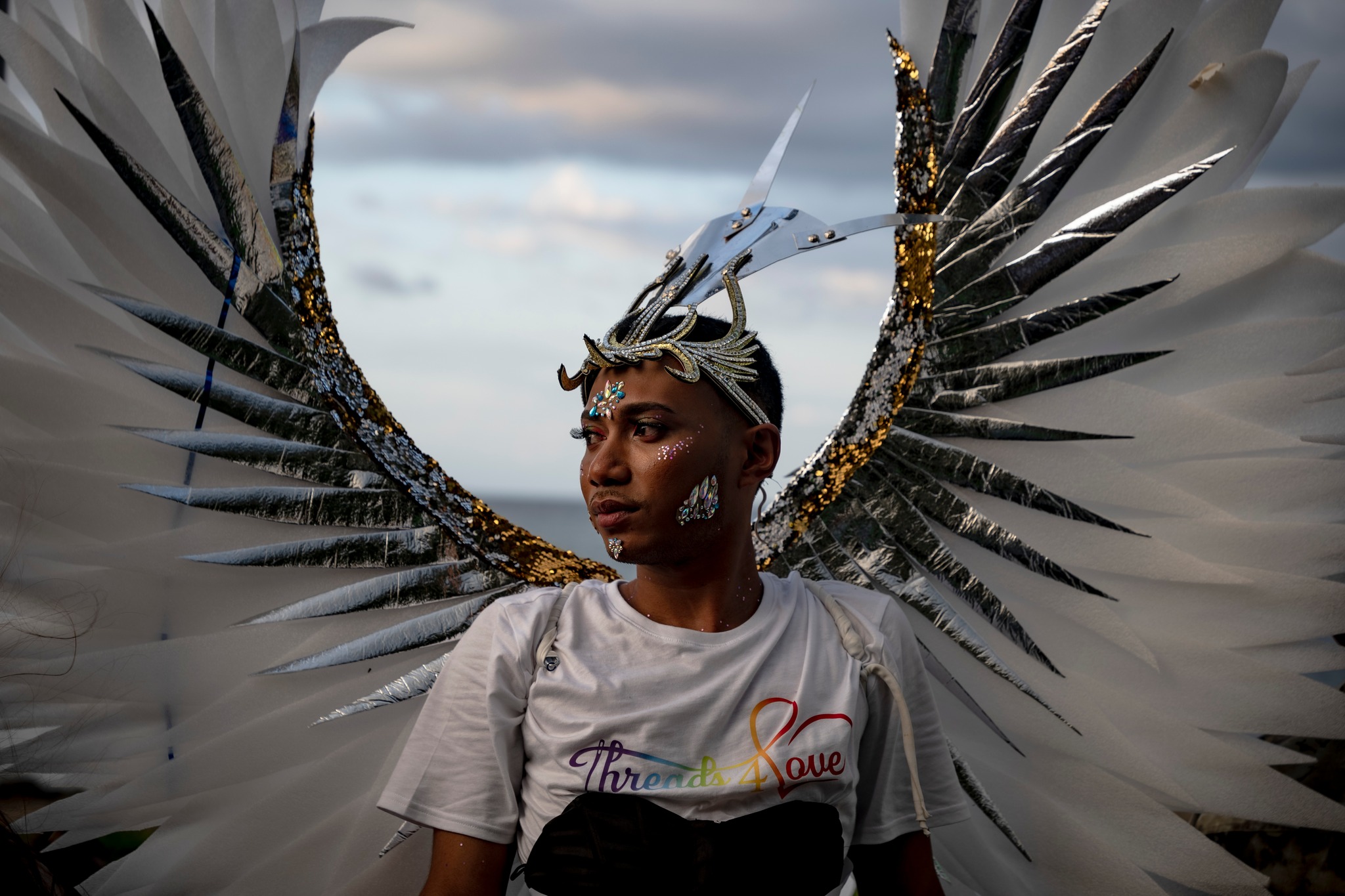
Pepito: His parents fought for independence, he fought for acceptance for all @ Timor-Leste Pride
Timor-Leste: Natalino Ornai Guterres talks about recent resistance against the growing LGBTIQA+ rights movement, centered on “proper” masculinity.
südostasien: How did your own journey lead you into LGBTIQA+ activism in Timor-Leste?
@ Emilia Oliveira
Natalino Ornai Guterres (they/he) is a prominent Timorese human rights advocate, and a key organizer of Timor-Leste’s ongoing Pride movement. Natalino has served as Social Inclusion Advisor for the national Strategic Development Plan revision, became the first openly queer parliamentary candidate for FRETILIN in 2023, and currently sits on the board of Fundasaun CODIVA and works as a consultant.
Natalino Ornai Guterres: I grew up in the capital Dili during the 1990s, when the country was still under Indonesian occupation [1975 – 1999]. After independence, the legacies of those 24 years stayed with us. Violence against children and young people was normalized in families, in schools, in the streets. Some of us started a small youth group to create safe spaces for children through art and dialogue. We even had a TV program on children’s rights and violence, linking it to patriarchy and power.
“I had grown up with a patriarchal image of God that was shaped by colonial influences.“
Even then, I felt different but couldn’t name it. There were not enough queer role models, and talking about gender or sexuality was taboo. When I appeared on TV and was read as “too feminine,” bullying got worse. Later, while studying abroad, I met people who lived openly. Therapy and rethinking faith helped me accept myself. I had grown up with a patriarchal God brought by colonizers, now I learned to see God as loving and forgiving.
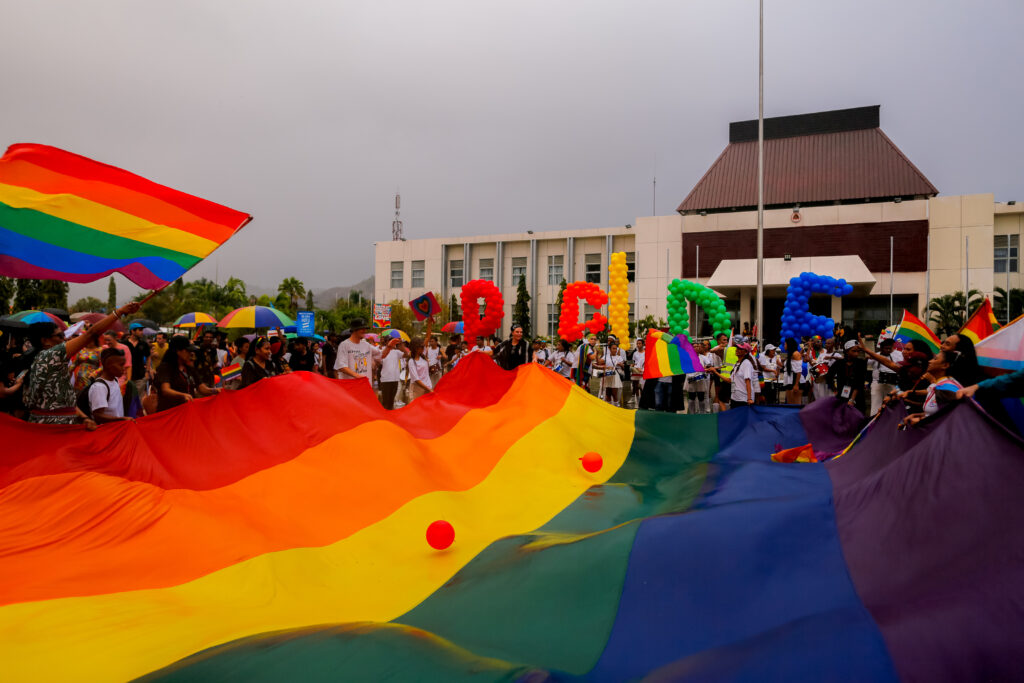
Pride 2024 passes the Presidential Palace. @ Clementino Amaral
Returning home in 2016, I was afraid of having to go back into the closet. But I also felt the queer community in Timor needed me. Together with friends, I co-founded Hatutan, a youth group for inclusion. We began by talking about equality and rights, then more openly about LGBTIQA+ issues. CODIVA, Timor-Leste’s umbrella network for LGBTIQA+ organizations, already existed, but we wanted to bring visibility to dignity and belonging. Together we started the Pride march. We called it a “March for Diversity” at first to test the waters. As Pride grew, so did understanding.
I was really struck by how fast Pride grew. How were you able to build such broad connection and support?
When we organized the first march in June 2017, I had the same feeling as in 1999 before the referendum: a sense of hope mixed with fear. We reached out to then Prime Minister Rui de Araujo for a statement of support and emphasized that independence must mean freedom for everyone.
For us, Pride was never an imported concept. It was about completing our struggle; fighting for acceptance and equality through solidarity, dialogue and policy instead of guns.
“For us, Pride was never an imported concept from the West.”
We featured voices like Mana Bella Galhos, a former youth independence activist and member of the LGBTIQA+ community, to highlight continuity between struggles for liberation, dignity, and human rights.
Of course, some people rejected this connection, arguing that the queer struggle is not a “national” one. If you only understand liberation through militarized masculinity, through uniforms and guns, then queer liberation, especially the aspect of queer joy and celebration, seems incomprehensible. But the resistance had many fronts: fighters, diplomats, civilians, women, youth. Pride simply asked for that diversity to be recognized.
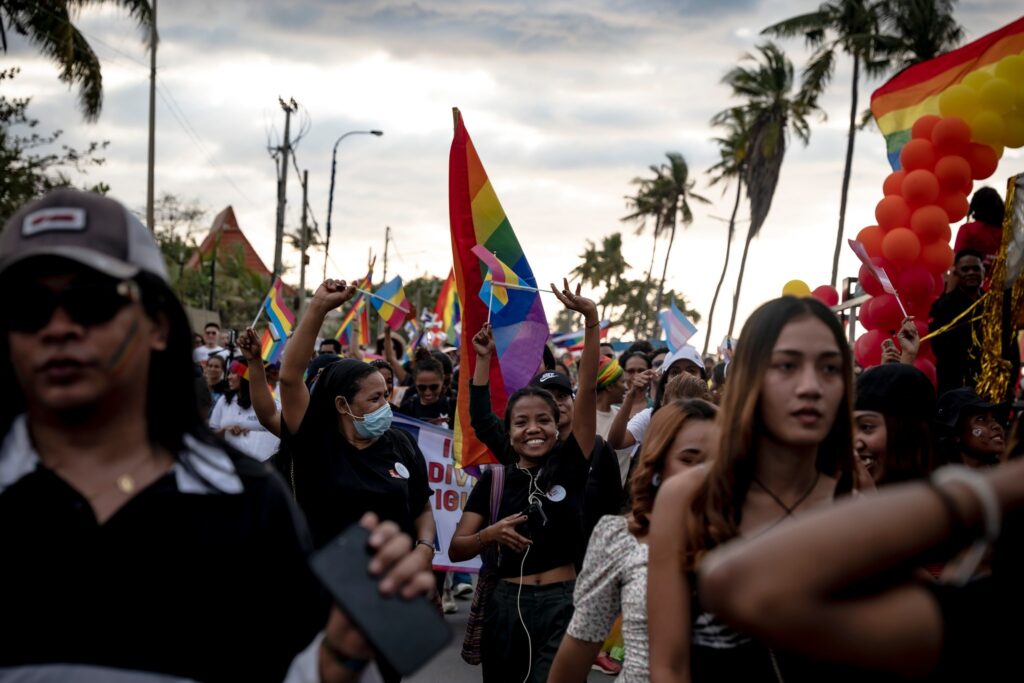
In 2025, nearly 1,000 people marched for “Human Rights for All.” @ Clementino Amaral
For example, when I saw the journalist Max Stahl on news documenting the 1991 Santa Cruz massacre, he was one of the first ‘heroes’ without a gun. As he captured the massacre, where countless youth died as they were holding a peaceful protest, I realized I could make a contribution to my country, even if I didn’t carry a gun.
How do you see the legacy of resistance movement shaping ideas about gender and identity now?
The concept of heroism in Timor is still very masculine. The armed wing of the resistance struggle built a moral code around bravery, sacrifice, and control. The Catholic Church and legacies of colonialism reinforced it and showed men as heads of households, women as caregivers.
Even when we talk about gender equality, many men feel their identity is under threat. During Pride 2021, a TikTok video mocked our march, trying to belittle us by comparing us to youth in 1991 who “fought against guns.” We responded that both generations are brave, one fought for independence, the other for acceptance. We also highlighted Pepito’s story, who was openly mocked through this video. He was an integral part of founding Pride. His parents were also well-known resistance leaders. His father was disappeared in 1999 and his mother died shortly after independence. They gave their lives for their country’s freedom, so how can it be, that their own child can’t live freely and peacefully in that very same country?
This example also shows that while there was growing support, there was also contestation. Unfortunately, this culminated in a severe backlash in 2024. What happened, and what did it reveal?
It began when Mana Bella married in Darwin and the President José Ramos-Horta attended as a witness. What should have been a private celebration quickly turned into a political battlefield. At the time, Timor-Leste’s politics were already polarized: resistance leaders competed over moral and historical authority, accusing one another of having “fought less.”
When the President’s attendance at the wedding became public, opponents seized the moment. Drawing on homophobic narratives, they accused him of “destroying the moral fabric of the nation.”

Pride in Timor-Leste brings together national and queer liberation @ Timor-Leste Pride
Then, during the march, a feminist poster reading “A vagina is not a reproductive machine” – a message about dignity and choice – was twisted online into an attack on motherhood. The distortion spread fast, merging misogyny and homophobia under “family values.” Photos of trans-rights activists at the Presidential Palace went viral, mocked as desecrating a monument to national sacrifice. The outrage showed how nationalism and masculinity remain tightly linked, and how queer and trans bodies still threaten that moral order.
The irony was that Pride had often ended at the Palace with the same route, posters, and messages. Nothing had changed except how people chose to see them.
That’s why I believe the backlash was never just about homophobia. It was deeply tied to political rivalries and populist agendas that instrumentalized our lives and well-being for power, regardless of the social divisions they caused.
How did that shape how you organized Pride in 2025?
After what happened, we had to rethink what Pride should be. Some wanted to go louder, but most felt we needed care and safety first. Visibility without protection can be dangerous. We decided to focus on community rather than scale.
We changed the route from Metiaut to Cristo Rei, shorter and calmer. Some said we were hiding; we weren’t. We were healing. Without politicians or media spectacle, it felt like Pride belonged to us again.
“Sometimes progress means going slower, but together.”
For me, keeping Pride smaller was an act of resilience and resistance. It reminded us that our strength doesn’t come from visibility alone, but from the relationships and care that keep us going when things get hard. Sometimes moving forward means walking slowly, but together.
Those sound like powerful lessons, that we can also learn from globally. As anti-gender rhetoric and funding cuts have intensified over the past years globally, how are these shifts felt in Timor-Leste?
They hit hard. When USAID cut gender funding, CODIVA and others lost crucial resources. There’s a misconception that donors spend huge amounts on gender or queer issues, but in reality, it’s almost nothing. Still, funding matters because human rights work requires livelihoods, not just passion.
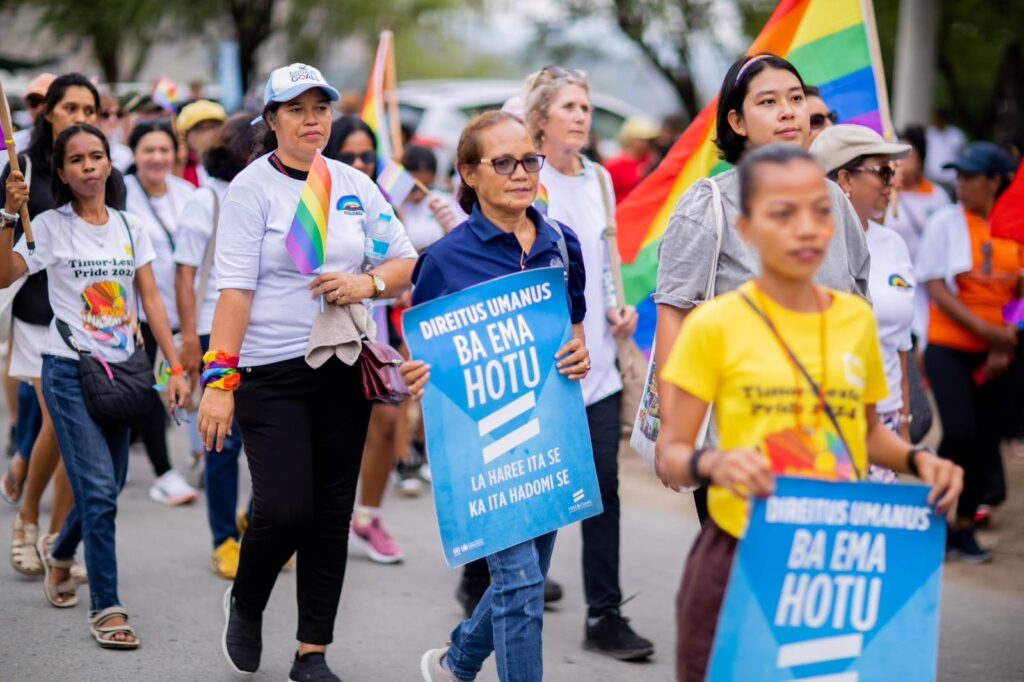
In 2025, nearly 1,000 people marched for “Human Rights for All.” @ Clementino Amaral
Some – even within our own community – say we should “go back to grassroots work,” but we never left it. Our work has always been community-based, we never relied on large donor projects. What we need now are sustainable partnerships: support for institutional development, social enterprise models, or long-term mentoring.
At the same time, the political climate is shifting. The current government is more populist, the Church remains powerful. The Secretary of State for Equality is an ally, but most leaders avoid the topic. Online, conservative influencers gain popularity by spreading hate. It’s frustrating and scary to see young people drawn into that.
A country can be independent and still not free if some live in fear. Democracy isn’t only about elections, it’s about how we treat difference, how we make space for everyone to live with dignity.
Queer rights test the depth of democracy. If we only defend freedom for those who look or love like us, then independence remains unfinished. Therefore Pride is about completing that struggle: to make freedom real for all.
In the face of the challenges you experience on a national and global level, what advice would you offer to other LGBTIQA+ activists and movements?
First, don’t let visibility become the only goal. Visibility without safety is exposure. Care and protection are also acts of resistance.
Second, build sustainability. Donor fatigue is real, but community fatigue is worse. We need to train leaders, diversify funding, and plan for longevity. Unfortunately, we also need to invest in our safety, both online and offline.
Third, build alliances that go beyond identity. Connect queer rights with broader human rights, democracy, and dignity. That’s how we linked Pride to independence: not as a special issue, but as part of everyone’s liberation. Similarly, democracy is not only about elections. It’s about how we treat difference, how we make space for everyone to live with dignity. For me, that’s what Pride means.
Finally, stay hopeful. When I see young queer Timorese marching and dancing, even after backlash, I remember 1999: the courage to dream of freedom.
Learn more about Pride in Timor-Leste via:
Timor-Leste Pride | Dili Timor-Leste | Facebook

Dieser Text erscheint unter einer Creative Commons Namensnennung 4.0 International Lizenz.